
What to Expect at Your First Voice Lesson

Updated: Jun 8

Are you nervous? Don't be.
A first lesson is mostly a "get to know your voice". Here is exactly what you can expect to break down with your teacher.
1. Finding Your Alignment (Posture)
Forget the old cliché of standing like a rigid soldier. Good singing posture is all about dynamic alignment—being stable but flexible so your breath can move freely. Your coach will likely check that:
Feet: Are hip-width apart, anchoring your weight evenly.
Knees: Are loose and unlocked (locking your knees can actually cause you to faint if you get tense!).
Chest and Shoulders: Your chest is proud and open, and your shoulders are dropped and relaxed, not hunched forward.
Head: Is level, as if a string is gently pulling the crown of your head toward the ceiling.
2. Unlocking the Low Breath (Breathing Techniques)
We use a lot of "shallow" breathing in daily life, but singing requires the holy grail of respiration: diaphragmatic breathing. Your coach will teach you how to take a "low breath."
The Sensation: When you inhale, your belly and lower rib cage should expand outward. Your shoulders should notshrug up toward your ears.
The Exercise: You might be asked to lay a hand on your stomach, breathe in for four counts feeling it expand, and hiss out on an "SSS" sound for eight counts to practice controlled air release.
3. The Secret Weapon: Straw Phonation
Don't be surprised if your teacher hands you a standard drinking straw. This is called Semi-Occluded Vocal Tract (SOVT) training, and it’s magic for your vocal cords.
What you'll do: You’ll place the straw in your mouth (sealing your lips around it) and make a gentle humming or buzzing sound through it. You might even do this with the other end of the straw submerged in a cup of water to make bubbles.
Why it works: The straw creates back-pressure in your vocal tract. This lifts some of the heavy lifting off your vocal cords, helps them vibrate evenly, and instantly warms up your voice without strain.
4. Vocal Exercises (The Warm-Ups)
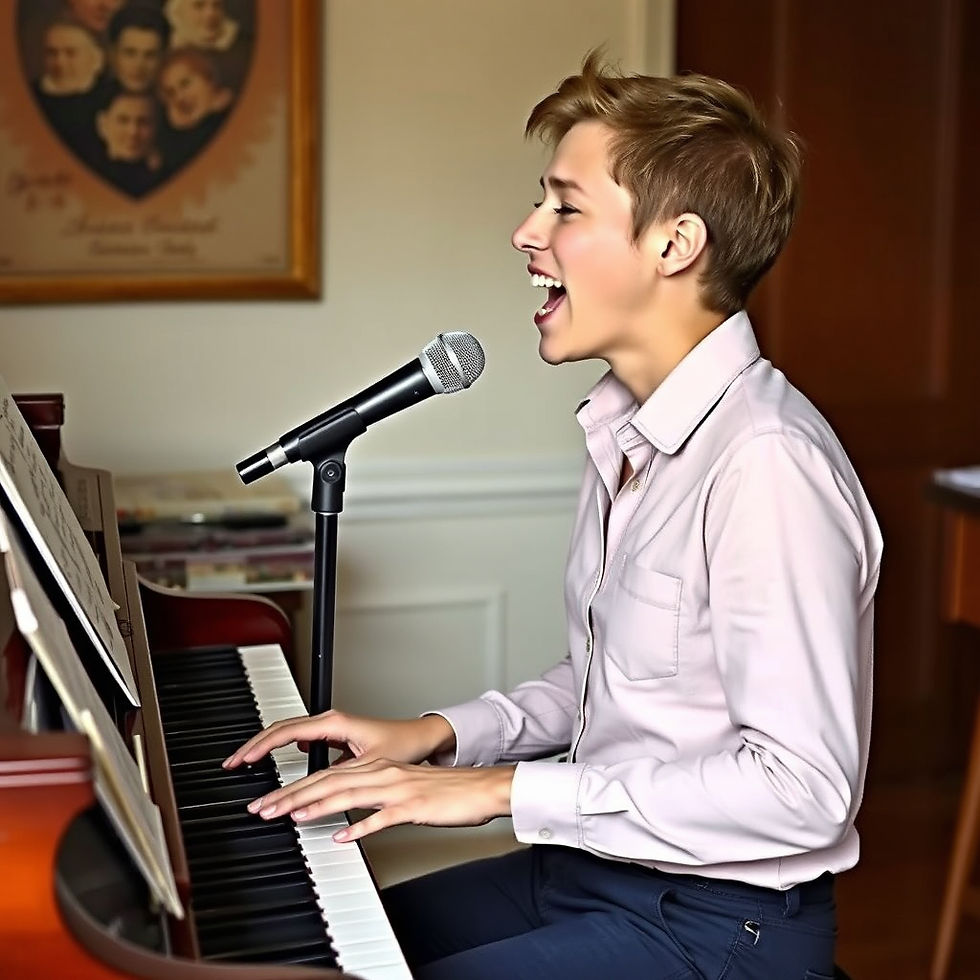
Once you're aligned and breathing, you’ll move to the piano for some vocalizes (vocal exercises). The goal here isn't to sound perfect; it's to explore your range and coordination.
Lip Trills / Bubble Lips: Blowing air through loose lips to make a motorboat sound while gliding up and down in pitch.
Sirens: Sliding from your lowest comfortable note to your highest, and back down, like an ambulance siren.
Five-Note Scales: Singing simple vowel sounds (like "Ah," "Ee," or "Oh") or consonants (like "Ma-Ma-Ma") up and down five consecutive notes to check your pitch accuracy and tone.
At the end of this lesson you should feel more confident about your singing and be ready to practice at home for the week.


Comments